
Safe Laser 1800/500: The 10 Most Popular Therapies Or Treatments.
Safe Lasers are versatile devices in the field of photobiomodulation (PBM) therapy, which is utilized across sports, medical, veterinary, and rehabilitative practices. While both the Safe Laser 1800 and 500 can be used for a wide range of conditions, their distinct technical profiles–specifically the 1800's high power and deep-penetrating focus and the 500's hybrid wavelength system and portability–make each unit particularly suited for specific therapeutic niches. The "most common uses" of each device are an exact reflection of the engineering of their design, which allows them for different clinical scenarios, from high-volume deep tissue treatment to mobile, combined-therapy applications. Knowing these applications can help clinicians choose the best equipment to meet the needs of their practice and their patients.
1. Deep Joint Disorders and Arthritis
Safe Laser 1800, the leading device to treat large and deep joint conditions. Its 810nm wavelength that is extremely powerful is able to penetrate the synovium of the joint, such as the shoulder, hip and knee. It is widely used to treat inflammation and pain that is caused by osteoarthritis. This rapid delivery of doses allows clinicians the ability to treat multiple areas in a single appointment.
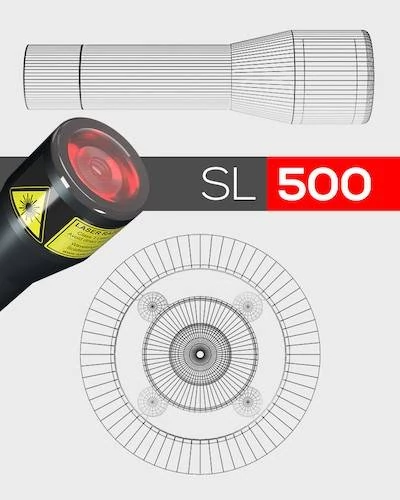
Secure Laser 500 – While it can offer relief for joint and knee pain however, it's lower output results in longer treatment time. Its effectiveness is often seen best when it is used on smaller or medium-sized joints such as the elbow wrist or ankle. It's a good choice for moderate to mild arthritis that is present in the context of a low-volume or mobile practice.
2. Chronic Spinal Diseases
Safe Laser 1800: Spine is the main use for SL 1800. It is extensively used to treat ailments such as disc degenerative disease (DDD) and spinal stenosis (SSS) as well as facet joint syndrome, and chronic lower back pain. It is crucial to access these structures via an extensive penetration into the layers of tissue and muscle. The strength of this device enables it to treat large areas of paraspinal muscle and the spinal cord itself.
Safe Laser 500 – Its spine applications are more restricted. It is best suited for pain-free areas that are localized within the spinal. Like, for example, an inflamed joint, the trigger point or muscle knot. point.
3. Acute Sports Injuries & Major Muscle Trauma
Secure Laser 180: The tool that is recommended for high-performance athletes and serious injuries. It is often used for rapid treatment of acute hamstring strains or quadriceps strains, severe muscle tears and ligament sprains that are significant (e.g., ACL, MCL). The ability of this drug to deliver an extremely high dose quickly will reduce the amount of time patients are not able to perform their duties.
Secure Laser 500 can treat sports injuries, but is generally used to treat smaller and less serious problems such as jumper’s knee tennis elbow, golfer's elbow, patellar tendinitis (patellar tendonitis) and ligament sprains in the calf. The ability to move the device allows it to be used on the sidelines or on the field.
4. Tendinopathies and Bursitis
Both models: Both devices can be effective in treating chronic tendon problems. The 1800's strength is ideal for treating deep-seated tendinopathies, such as gluteal tendinopathy and Hamstring tendinopathy that is proximal. The 500 is extremely popular and effective for treating superficial tendon issues such as Achilles tendinitis or rotator-cuff and tennis elbow. The 500's blend of wavelengths 810nm and 660nm (for tendon) permits an effective treatment.
5. Post-Surgical Rehabilitation
Secure Laser 1800 – The 1800 is often used in rehab clinics. It is used for managing swelling and pain after joint replacements. The deep penetration aids in speeding up healing of the surgical site and reduces the need for pain medication.
Safe Laser 500: Its function in post-surgical care usually concentrates on the area of the incision itself. The wavelength of 660nm aids in wound healing, reduces scar tissue growth and enhances tissue remodeling around surgical scars. This treatment is frequently used after cosmetic surgery, surgery on the hand, or any other procedures where superficial healing is essential.
6. Neuropathic Nerve Compression as well as Neuropathic Nerve Pain Syndromes
Secure Laser 1800: Because of its deep penetration it is a great laser for treating nerve roots compression. This includes sciatica, which results from a disc that has slipped. It is able to relieve the inflammation and pain due to the nerve root.
Secure Laser 500, a device that is commonly used to treat of peripheral neuropathies. The device's specific application allows it to be used for conditions like carpal-tunnel syndrome, tarsal-tunnel syndrome, and peripheral diabetes neuropathy. The light can be used to reduce swelling around the nerves and stimulate their repair.
7. Skin Ulcers and Wound Healing
Safe Laser 500: This is a standout application for the SL 500, where its 660 nanometer wavelength shines. The laser is commonly utilized in wound clinics by dermatologists to treat leg ulcers and diabetic foot. The red light stimulates collagen synthesis, fibroblast activation, epithelialization and faster wound healing.
Secure Laser 1800 : The 1800 although not the primary purpose, is able for treating deep tissue injuries or wounds. It does not have however, the particular surface wavelength optimization that the 500 has to treat this need.
8. Veterinarian Applications
Safe Laser 1800: For the field of veterinary medicine, the 1800 can be utilized to treat horses as well as large animals suffering from conditions such as bowed ligaments, splints, or back pain. Its power allows for effective treatment using thick hide and muscle. In small animal practices it is utilized for hip dysplasia treatment, as well as other joint problems that cause deep pain for dogs.
Safe Laser 500's portability, combined wavelengths, and its compact size make it a popular option in small animal clinics. It is often used to heal injuries, treat skin infections, and treat arthritis in cats or small breed dogs.
9. Treatments for maxillofacial and dental issues
Safe Laser 500: The 500's shape and 660 nm capabilities make it a common sight in dental practices. It's used for a variety of purposes for example, speeding the healing process after extractions, as well as treating apthous ulcers.
The safe Laser 1800. This is an uncommon laser that is employed in dentistry because it's too powerful and bulky for the majority of dental issues.
10. The Workflow and Treatment Philosophy is specific to the practice
Each device has its own most typical use that is determined by the practice. Safe Laser 1800 can be the basis of any large-volume orthopaedic, physiotherapy, chiropractic, or other facility dealing with pathology in the deep tissues. Efficiency in time is the most important factor. Safe Laser 500 – the ideal tool to use for mobile therapy wound care specialists, dentists, and veterinarians. The Safe Laser 500 offers portability with a range of options and the capability to treat a wide range of conditions from superficial to mid-depth. Its versatility is directly linked to its popularity in different treatments. Have a look at the recommended Soft Laser for site examples including széf lézer, nagyteljesítmény? lézer, soft lézer terápia, lagy lezer, soft laser 500, soft lézer terápia, lágylézer készülék bérlés, soft laser kezelés, lágy lézer otthonra, lagy lezer and more.
Top 10 Safety Precautions To Be Aware Of While Making Use Of The Safe Laser 1800 Or 5000
Safe Laser devices are equipped with a high-power Class 4 therapeutic laser. They're not ionizing, but they can be incredibly dangerous because of their intensity. It is crucial to follow the rule "First Do no harm". Patients who use these devices – whether trained professionals or users at home – must have a thorough understanding of the device's therapeutic potential and its potential dangers. Safety measures extend beyond simply reading a guide as they require an established protocol that includes pre-treatment tests, correct operational procedures and a strict adherence to contraindications. The following details outline the crucial safety measures necessary to ensure safe usage of the Safe Laser 1500 and 500.
1. Absolute contraindications when to avoid using the product entirely
It is vital to determine situations where lasers are strictly not permitted. The application of laser energy in these conditions could cause serious injury. Absolute contraindications are:
Active Malignancy or Carcinoma: Never apply laser energy directly on a known or suspected metastasis or cancerous tumor. The energy of the light could cause cellular growth to increase and the tumor's activity.
The Thyroid Gland. The thyroid gland is highly active metabolically and is sensitive to photobiomodulation. It is prohibited to directly apply the treatment to the thyroid articulation within the neck due to potential for altering thyroid function.
The abdomen is a major concern during Pregnancy: Laser should not be used on the uterus of a pregnant woman to prevent any potential, and yet unidentified impacts on the development of the fetus.
Direct Eye Exposure Direct Eye Exposure: This is an essential and non-negotiable rule.
2. All Present Must Wear Laser Safety Glasses
It is crucial to remember that even though the wavelength of 810 nanometers is invisibly, it can still cause serious and irreparable eye injury when the beams are seen directly from the outside or reflect. Utilizing laser safety glasses certified by a third party is the most crucial method to ensure physical safety. This includes the person operating, and anyone else who may be in the immediate treatment space. The glasses have to be tested for wavelengths between 810nm and the optical density (ODs) that are appropriate for each device. Wearing regular safety glasses, or even sunglasses isn't enough and gives the illusion of security.
3. Relative Contraindications and Precautions: Proceed with caution
Certain ailments should be treated cautiously and the treatment should only take place following a thorough risk-benefit analysis by a licensed healthcare professional. This includes:
Photosensitivity: Patients who take photosensitizing medication (e.g. certain diuretics or antibiotics) are at greater risk for reactions to skin.
Hemorrhage (active bleeding) Avoid applying directly on hematomas or bleeding that is acute, since vasodilator effects can result in bleeding increasing initially.
The most common recommendation is to not treat febrile illnesses if the fever is very high.
Endocrine Glands – Unless otherwise indicated, it is best to stay clear of organs that regulate the body like the thyroid and the pineal gland.
The children and teens should be cautious about applying the cream directly over the epiphyseal opening or growth plates.
4. Make sure you are protected from thermal damage by applying the right technique
As Safe Laser is a "cold" laser therapy is a principled treatment. However because of the powerful power of the 1800 (18W) It could be risky to keep the device for long time, as the thermal buildup could cause small burns. As directed by the clinic or manufacturer, the most important safety measure to take is moving the device gradually and continually during treatment. This ensures an even energy distribution, and prevents one area from receiving harmful thermal doses.
5. Skin Assessment and Preparation for Pre-treatment
An easy but crucial security measure is to examine the treatment area before application. The skin should not be damaged, but clean and dry. Do not apply the laser to damaged skin or rashes or over infected tissues without specific medical guidance. Remove reflective surfaces (jewelry, for example) from the treatment zone. Make sure the skin is free of oils, lotions, or topical analgesics that might alter the absorption of skin or, in rare cases they may act as a photosensitive.
6. Device Safety and Handling
Security is based on the correct use of the device. This includes:
Examining the Device Before making use of the device, check it to look for cracks or indications of damage.
Secure grip: Always hold the device with the device in a secure grip, with a wrist strap, to prevent it from being dropped, which could damage the internal laser components or the housing.
Keep the device as well as the safety glasses provided in the protective case, when not being used. Protect them from extreme temperatures and moisture.
7. Environmental Safety and Reflective Surfaces
It is crucial to think about the treatment environment. Be aware of any reflective surfaces within the room, like glass picture frames, metallic fixtures, or shining jewelry. Laser beams that reflect off surfaces can be as dangerous as the primary laser beam. Place both the patient and you so that the laser won't reflect off a surface into anyone's eyes, even when it's accidentally directed away from the subject.
8. Dosage Adherence & Biphasic response
A strict adherence to dosages prescribed (Joules/cm2) is a key safety and efficacy factor. Biphasic responses to energy (where the excess energy is a blocker) means that a higher than recommended dosage not only ineffective, but also harmful. It can increase inflammation or cause tissue irritation. In the case of PBM it's dangerous and wrong to follow the "more is better" philosophy. Follow the treatment schedule and protocol precisely.
9. Post-Treatment Monitoring and Documentation
Safety monitoring doesn't end with the device's shut off. Operators must monitor the health of patients following treatment, and ask about any unusual sensations that may occur in the next 24 hours. Although serious adverse effects with regular use are uncommon recording the treatments parameters and the patient's responses is critical for tracking long-term outcomes and identifying individual sensitivities.
10. Education for Users and Professional Oversight
The most important safety measure is user education. This includes an official training program for the personnel working in the clinical area regarding the PBM and device operation. Home users should adhere to the direction and strict supervision of a healthcare specialist with a legitimate diagnosis, and a personalized, clear treatment program. Safe Laser 1800 and Safe Laser 500 can only be used with a complete knowledge of the safety precautions. The responsibility for safe operation lies entirely on the user, which makes knowing the basics the most crucial aspect of safety. Have a look at the top sudeck szindróma for blog info including lágy lézer terápia, lágylézeres kezelés, lézer kezelés árak, lágylézer készülékek, nagyteljesítmény? lézer, soft laser kezelés, safe laser kezelés ára, lágylézer terápia, lézerfény terápia, safe laser ellenjavallat and more.
