
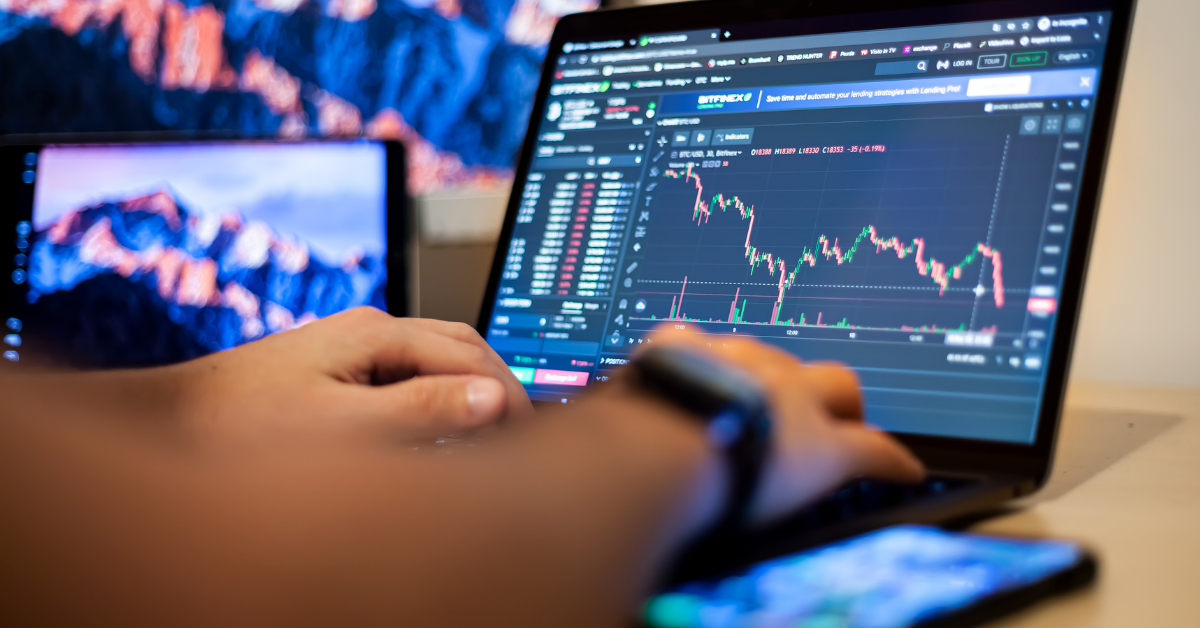
You're not the only one who has ever pondered what the experts do with the markets. Many traders consider the S&P 500 to be their home playground, especially those who trade with prop firms. And with good cause. Trading the S&P 500 gives you access to the beating heart of the American economy, which is basically a snapshot of the biggest companies in America. The catch is that investing in an ETF and then abandoning it is not the same as trading it like a professional prop trader. It's more about precision, self-control, and having the appropriate equipment.
Let’s discuss how to invest in the S&P 500 like a pro prop trader.
Why the S&P 500 Is a Prop Trader's Dream
Prop traders won't waste their time on instruments that lack volume or volatility. They prefer markets that are in motion and provide them with space to profit from them. The S&P 500 fits the bill:
- Liquidity: S&P 500 futures are among the most actively traded instruments globally. You can come and go without slippage devouring you alive.
- Volatility (in the right quantities): The index doesn't fluctuate as wildly as crypto does, but it's volatile enough that short-term traders have more than enough opportunity.
- Macro relevance: If you want to trade something that correlates to the overall economy, this is your ticket. News regarding jobs, inflation, interest rates—they all make themselves known in the S&P's price action.
For a prop firm trader, that's a goldmine. You can construct both short-term and long-term plays on it, depending on your approach.
Step 1: Understanding the Instruments You Can Trade
When someone says "invest in the S&P 500," they may mean several things. Let's dissect:
- ETFs (such as SPY): Perfect for long-term investors. Not exactly the weapon of choice for prop traders that require leverage and quick execution.
- CFDs (Contracts for Difference): Well-liked outside the U.S. and frequently provided by brokers. Ideal for small accounts, but be careful of spreads and commissions.
- Futures (E-mini & Micro E-mini): This is where the big boys (and prop traders) operate. Futures provide you with leverage, liquidity, and almost 24/5 trading hours. If serious about trading the S&P like a pro, futures are your best option.
- Options on the S&P 500 or ETFs: Useful for hedging or advanced strategies, but they require a deeper understanding of Greeks and volatility.
If you’re with a prop firm, chances are you’ll be trading futures. That’s why picking the best futures trading platform matters so much. Execution speed, charting tools, and order routing can make or break your edge.
Step 2: Crafting a Prop Trader’s Mindset
You can't discuss trading like a prop trader without mentioning mindset. This isn't the Hollywood "follow your heart" nonsense you find in films. Actual prop traders have the following mindset:
- Risk is all. They think about how much they will lose before they think about profit. That means establishing daily loss limits, adhering to stop-losses, and not pursuing losses.
- Consistency, not home runs. Many retail traders hit the fences, waiting for that one trade to double their account. Prop traders are concerned with hitting singles and doubles on a daily basis.
- Flexibility. Markets don't care about your strategy. Prop traders understand when to back away, when to push, and when to simply sit on their hands.
If you're looking to trade the S&P 500 professionally, begin here. It's not the strategy you learn on YouTube—it's about how you treat yourself when things don't work.
Step 3: Creating Your Strategy
What sort of strategies do professional prop traders utilize on the S&P 500?
Scalping
There are some traders who enjoy coming in and out all day, seeking small moves. S&P 500 futures are ideal for this due to their liquidity. You can witness a trader making 5–10 trades during a morning session, risking only a few points to capture three or four.
Intraday Trend Trading
Other traders look at the bigger intraday picture. They’ll identify whether the market is trending up, trending down, or stuck in a range. If the Fed just dropped an interest rate bomb, for instance, you’ll probably see them ride the trend instead of fading it.
Swing Trading
Some prop traders hold positions overnight or over a few days, though this is less typical. Futures enable this, but overnight margin requirements and risk controls at prop firms typically make this more challenging.
News/Event Trading
Jobs numbers, CPI, Fed releases—name it. Prop traders are fond of these events since they cause huge swings in the S&P 500. The secret is not to guess the news but move ahead of the rest of the market.
Whatever strategy you implement, ensure that it is something you can replicate again and again. Prop firms adore traders who can present consistent results, not a fluke run.
Step 4: Risk Management Like a Pro
Let's get real: this is where everybody blows up. You can have the greatest setup in the world, but if your risk management is pathetic, you will be out of there within a week at a prop firm.
This is how the pros do it:
- Fixed daily loss limits. You reach it, you're done. No revenge trading.
- Position sizing. If your maximum loss is $500 per day, you don't open positions where one losing trade can wipe it out.
- Use of stops. Pro traders don't use "mental stops." They enter real orders into the system.
- Scaling. A number of pros scale into trades rather than going all in at once. That leaves flexibility if the market turns against them initially.
Risk management is dull—until it saves your account.